Ecological Sampling
We have been surveying pinyon-juniper woodlands to understand how climate, stand structure, and genetics shape tree health and seed production. The results of these efforts aim to not only improve our ability to forecast how seed production and forest health will change in the future, but to also improve stewardship and reforestation efforts. This research is being led by ecological researchers at UC Berkeley in closer partnership with the entire PiCCA team.
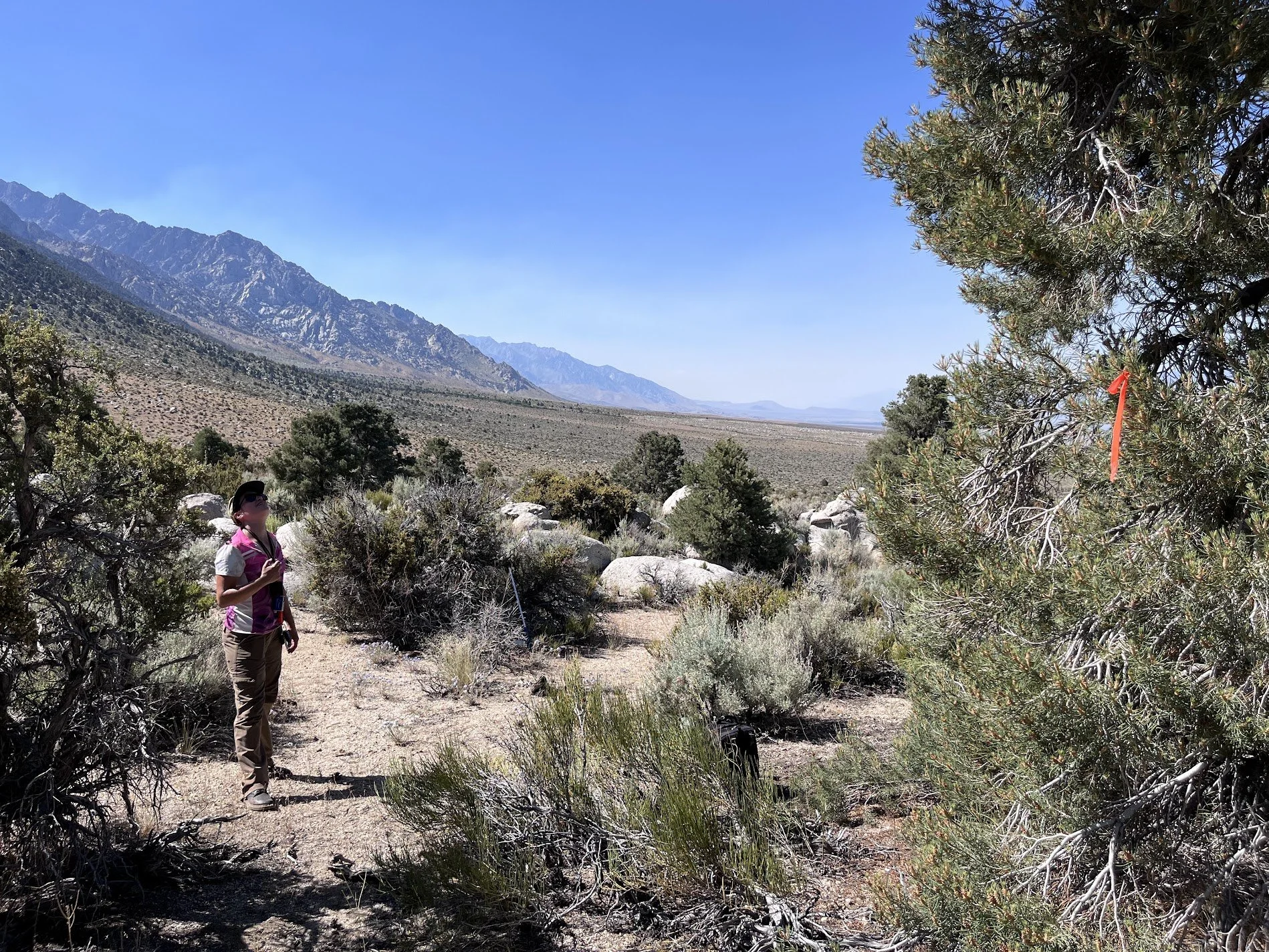
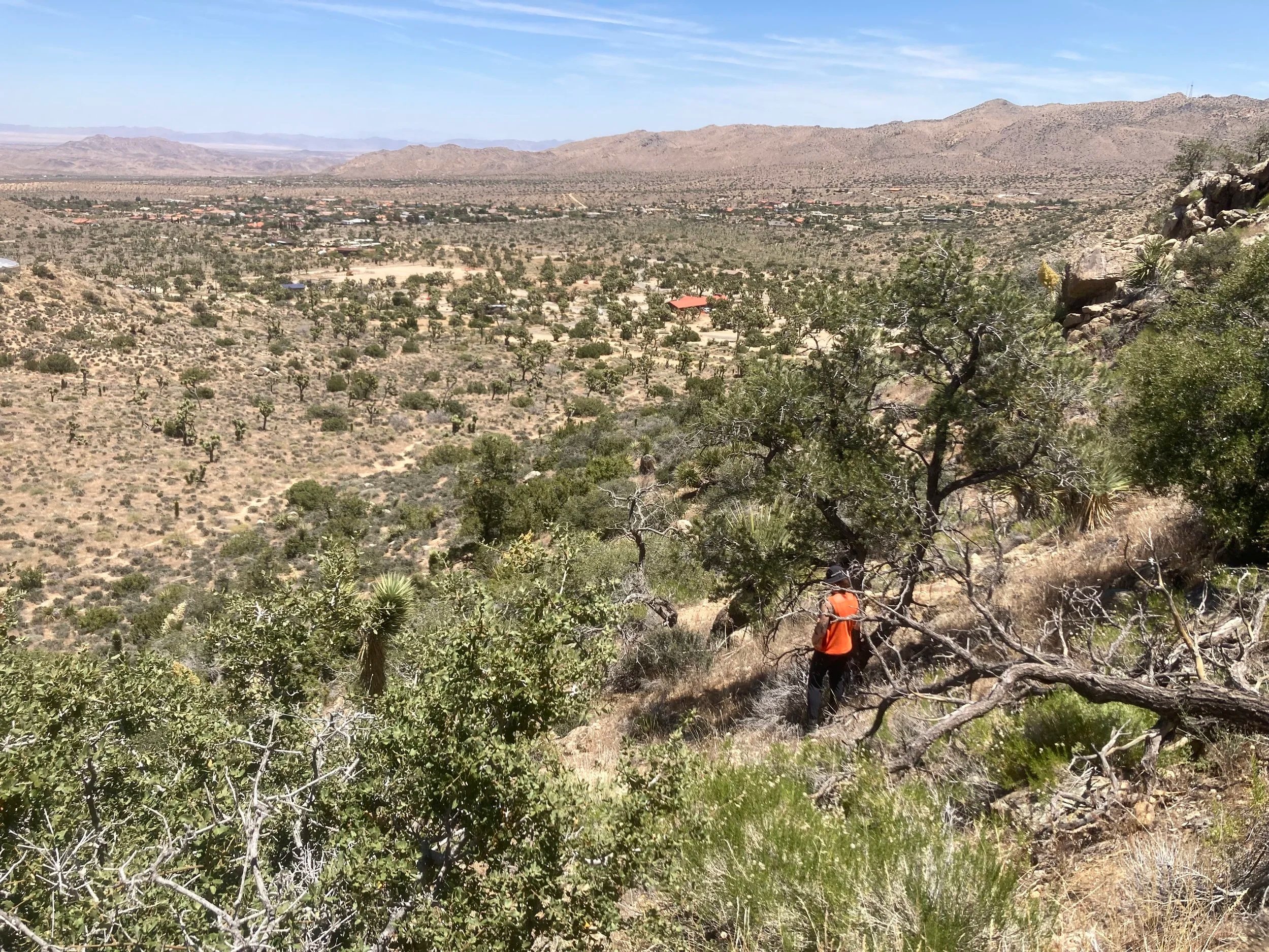
A field crew member from UC Berkeley counts cones on pinyon pine tree growing in the San Bernardino mountains.
Research questions
How does climate impact cone production?
Pinyon pines don’t produce cones every year. Whether or not they produce cones in a given year likely depends on temperatures and rainfall in previous years — but we don’t know what that relationship is in single-leaf pinyons, making it hard to predict how climate change will change regeneration patterns.
How does stand structure impact cone production?
The number of trees growing in an area, and how large those trees are, has been shown to impact tree health and cone production in some other conifers, but not in all of them. Understanding whether this link exists in pinyon pines is important for determining whether thinning is a good management strategy.
What is the genetic structure of single-leaf pinyon pine populations?
Across the range of pinyon pines, different populations may have local adaptations to their climate that will allow them to cope better with climate change. Documenting genetic variations across populations can contribute to evidence-based decisions about conservation and reforestation efforts.
Completed Fieldwork
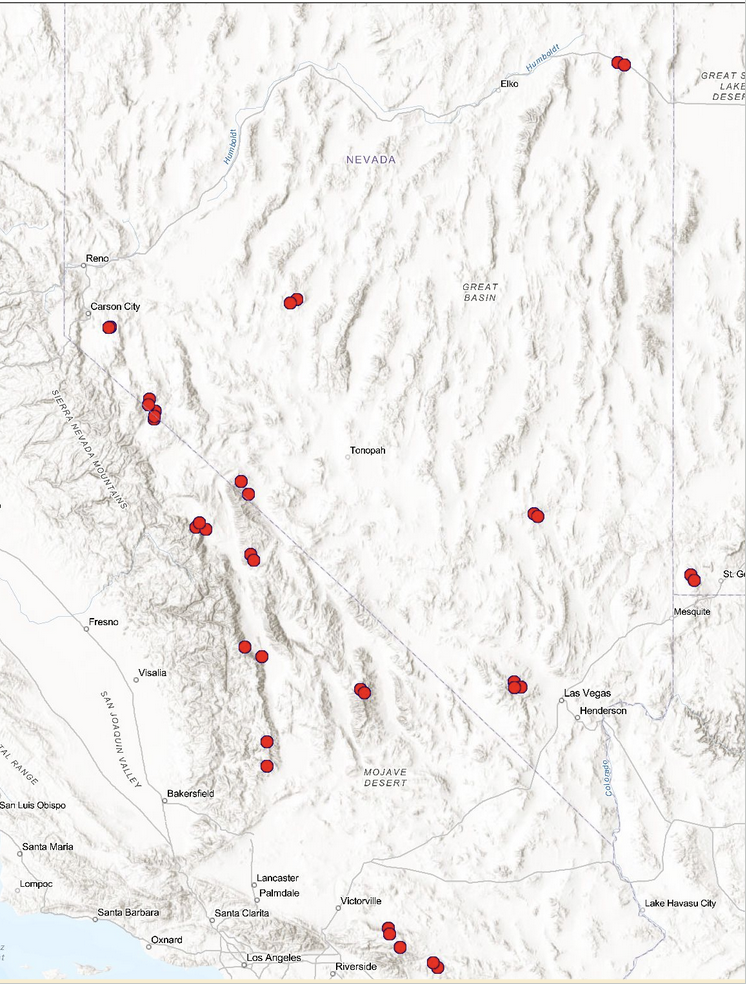
Sampling sites in eastern California, Nevada, and southwest Utah.
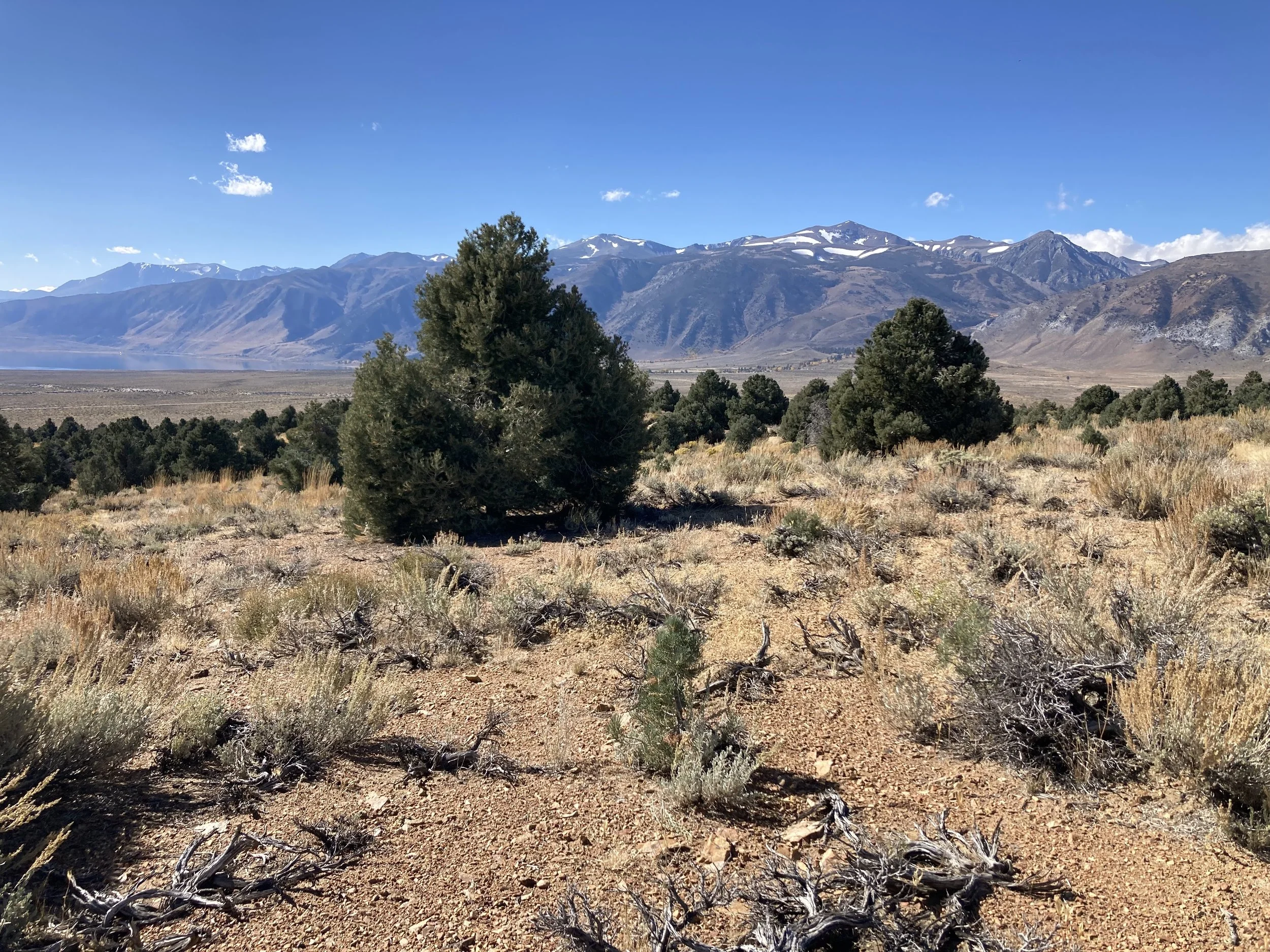
In summer 2024, the team sampled 36 plots across the range of single-leaf pinyon pine. At each plot, we collected data on stand structure, historic cone production, and tree health, as well as needle samples for genetic analyses. In fall 2024, the team went back to 26 of the sampled plots to collect cones from sampled trees, so seedlings could be grown in greenhouse conditions. Read more about what’s happening with those seedlings here.
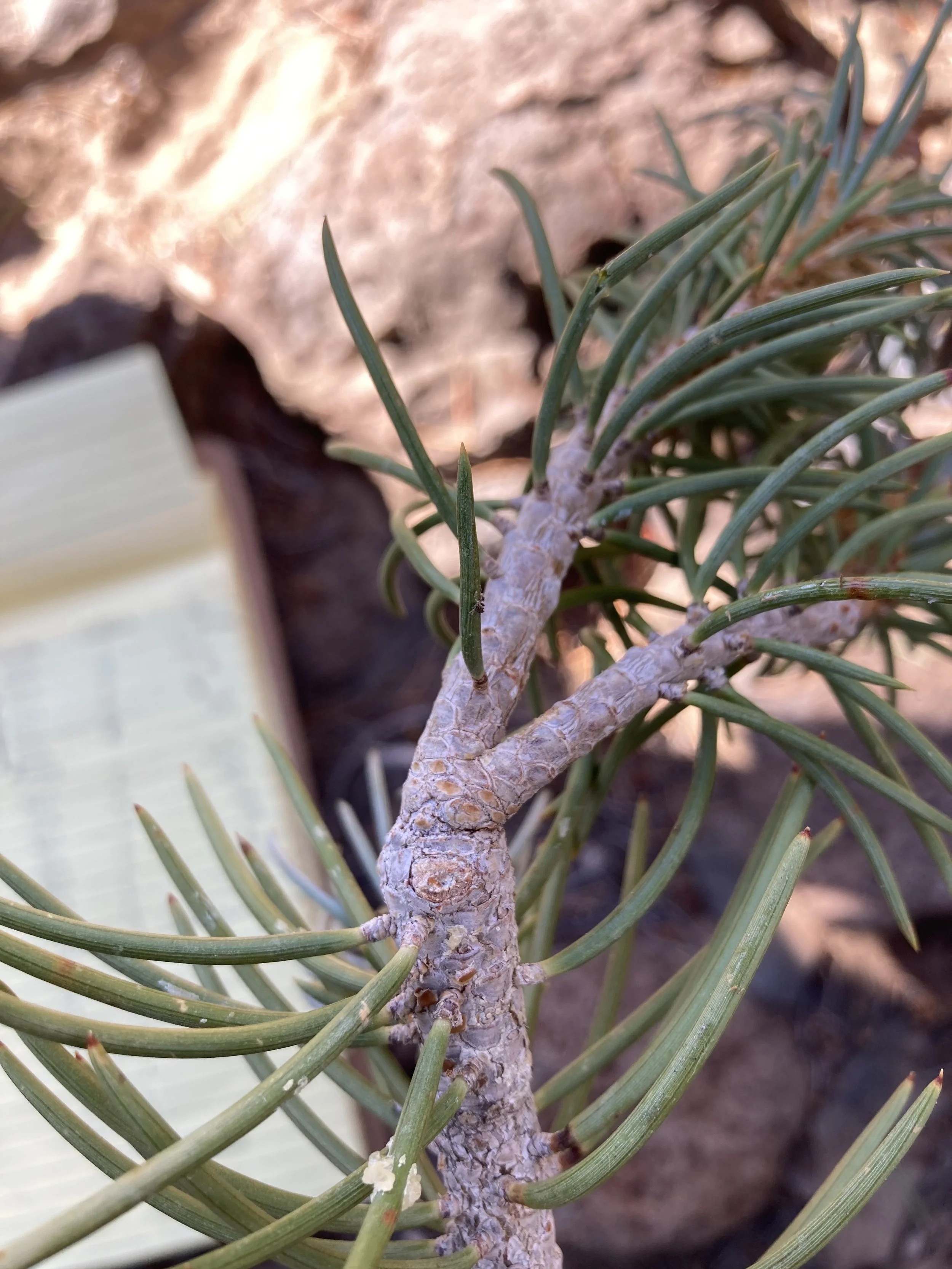
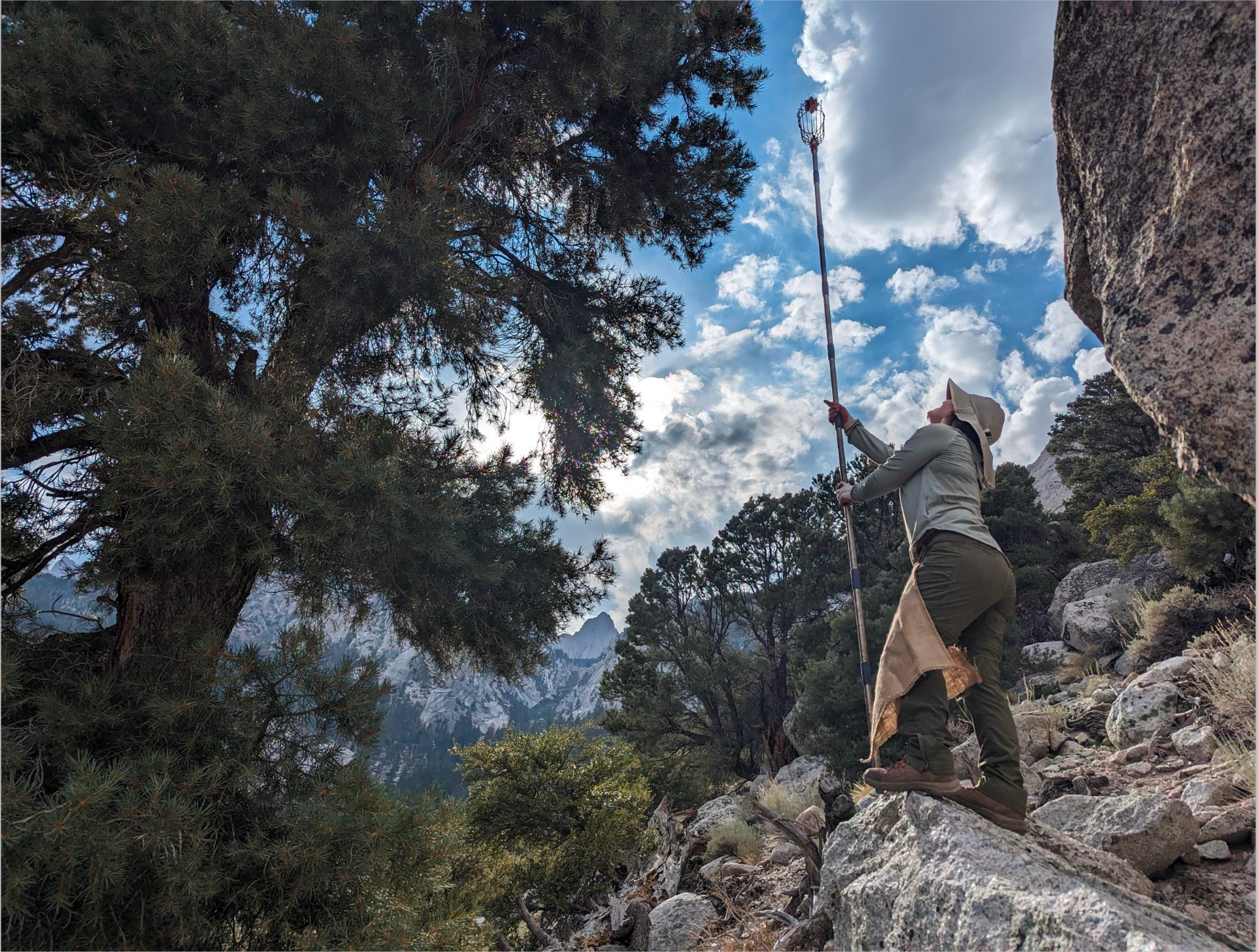
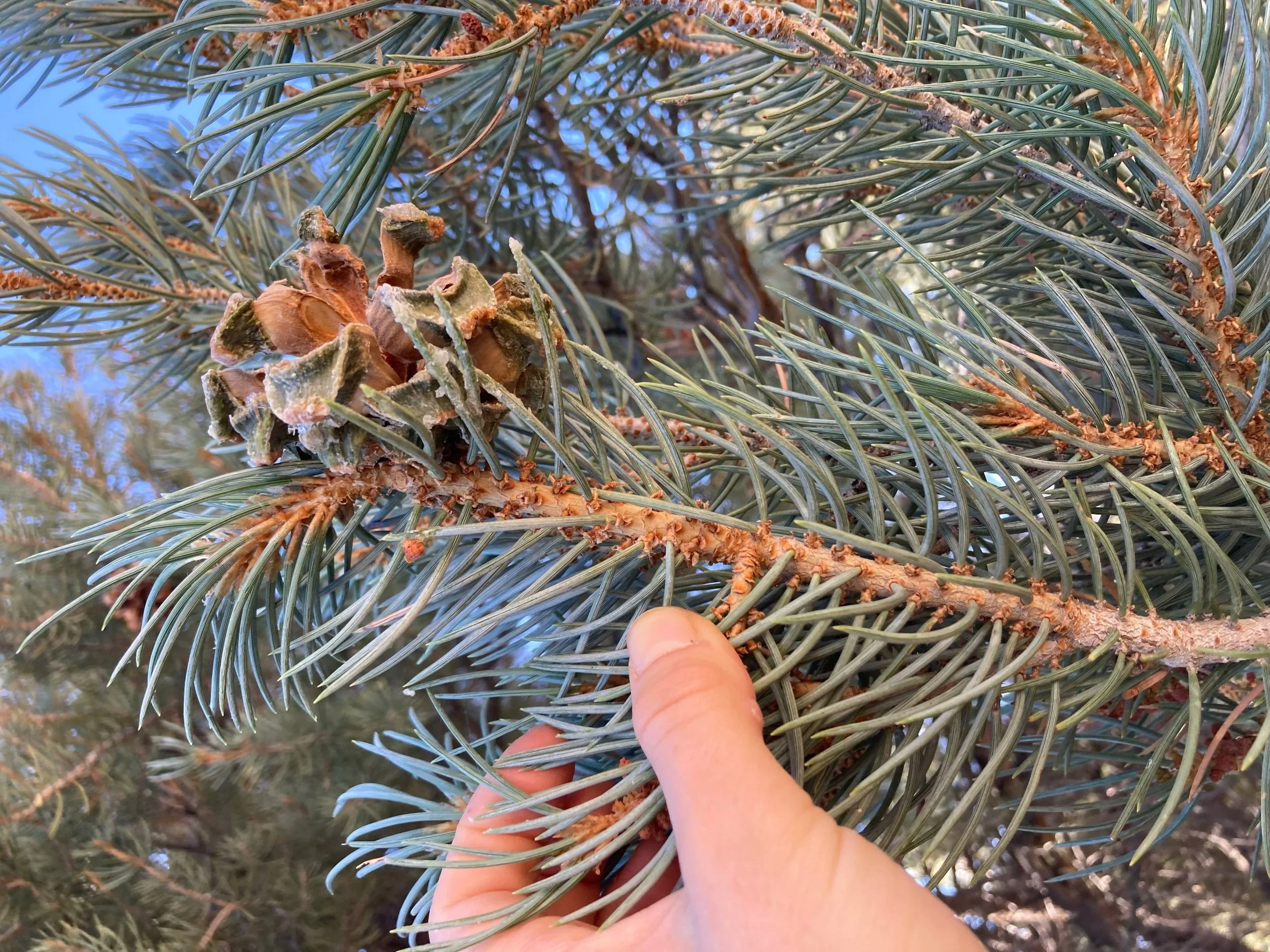
Left: cone scars on branches were counted to document historic cone production.
Right: a field crew member collects pine cones from a focal tree.